Hub Motor vs Mid Drive Electric Bike: Which Is Better?
Deciding between a hub motor and a mid-drive electric bike? We break down the key differences to help you choose the right setup for your riding style and terrain.
 By Ebike Desk
Updated November 4, 2026
Quick picks: our top 3 at a glance
As an Amazon Associate I earn from qualifying purchases. Prices and availability change.If you are shopping for an electric bike or planning a DIY conversion, you have likely faced the big question: hub motor vs mid drive electric bike which is better? This comparison is for riders who want to understand the real-world trade-offs between these two motor types before spending their money. The main differences come down to torque delivery, efficiency on hills, weight distribution, maintenance complexity, and how the motor interacts with your bike’s gears. In 2026, the market offers more options than ever, from powerful hub motors to sophisticated mid-drive systems. Let us help you decide.
| Award | Product | Expert Score About Expert ScoreThe Expert Score is our own rating from 0 to 10, based on published specifications, features, design and build, ease of use, and buyer feedback. It reflects independent research and is never influenced by manufacturers, retailers, or affiliate commissions. | |
|---|---|---|---|
| Best Value |
 Tomvorks 48V 500W Rear Hub Motor |
8.9/10 | Buy |
| Best Premium |
 KPATH 48V 1000W Hub Motor for 20/24/26-inch Rims |
7.8/10 | Buy |
 Generic 26 Inch 750W Fat Bike Hub Motor |
8.8/10 | Buy | |
 WATEBATH 48V 1500W Brushless Hub Motor |
8.3/10 | Buy | |
| Best Budget |
 LTIGOAW 26-Inch 1000W Rear Hub Motor Kit |
8.8/10 | Buy |
| Best Overall |
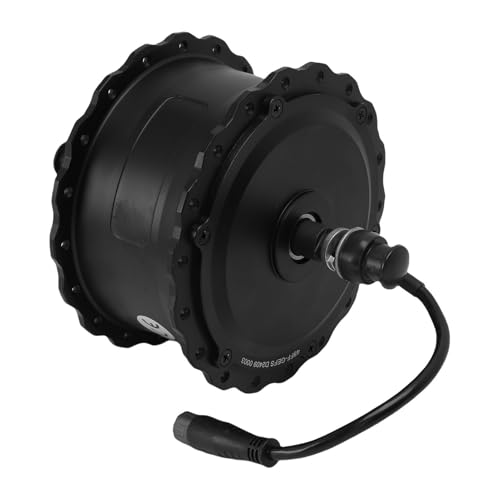 Keenso 750W Front Hub Motor |
9.2/10 | Buy |
Tomvorks 48V 500W Rear Hub Motor
A 48V 500W rear hub motor for DIY electric bicycles, scooters, and folding bikes. Its weatherproof build and quiet operation suit riders upgrading for reliable commutes or easier hill climbing.
Pros
- Weatherproof design helps ensure reliable performance in rain.
- Lightweight aluminum rim supports efficient rides.
- Quiet operation reduces noise disturbance.
- Versatile compatibility with DIY e-bikes, scooters, and folding bikes.
Cons
- No verified buyer feedback available to confirm real-world durability.
KPATH 48V 1000W Hub Motor for 20/24/26-inch Rims
This rear hub motor from KPATH delivers 1000W of power and 85 Nm of torque, reaching speeds up to 34 mph. It fits 20, 24, and 26-inch wheels with a dropout spacing of 170-175 mm, making it a versatile option for DIY e-bike conversions on various bike types.
Pros
- High torque output of 85 Nm for strong acceleration and hill climbing
- IP54 water resistance and overheat protection enhance durability
- Compatible with multiple bike styles including mountain, folding, and pedal-assist bikes
Cons
- Requires careful verification of axle and controller compatibility before installation
- No included controller or display, adding to conversion cost and complexity
Generic 26 Inch 750W Fat Bike Hub Motor
This 750W brushless hub motor is built specifically for fat bikes, aiming to deliver strong torque and speed for tackling challenging terrain. Its 48V system promises smoother acceleration and a more thrilling ride, appealing to both casual riders and enthusiasts. However, potential buyers should verify compatibility with their bike's specifications before purchasing.
Pros
- Powerful 750W brushless motor for tackling varied terrain
- Designed for fat bikes, providing high torque and speed
- Sturdy construction for outdoor durability
Cons
- Compatibility may be limited to specific fat bike frames and dropouts
- Heavy weight (about 10 pounds) may affect bike handling
- No customer reviews available to gauge real-world performance
WATEBATH 48V 1500W Brushless Hub Motor
For DIY e-bike builders seeking raw power, this 1500W brushless hub motor from WATEBATH delivers a robust 40 N.m of torque and 500 rpm, fitting a wide range of wheel sizes from 20 to 29 inches and 700c. Its controller adapts output to terrain, and the brushless design keeps noise under 45 dB, making it a solid choice for converting an aluminum-frame bike into an electric commuter or trail rider.
Pros
- Strong 1500W power and 500 rpm handle varied terrain and loads effectively
- Controller automatically adjusts power for safer, easier riding on different road conditions
- Brushless motor operates quietly at less than 45 decibels
- Compatible with multiple wheel sizes (20 to 29 inches and 700c aluminum wheels)
- Built from high-grade aluminum, iron, copper, and magnetic steel for durability
Cons
- No verified buyer reviews available to confirm real-world performance
- Wheels are not included, requiring additional purchase and assembly
LTIGOAW 26-Inch 1000W Rear Hub Motor Kit
This conversion kit turns a standard 26-inch bike into a high-powered electric ride, with a 1000W brushless motor that delivers up to 53km/h and 45N.M of torque. It's built from corrosion-resistant materials and includes everything needed for assembly, making it a practical choice for DIY enthusiasts who want a reliable, low-maintenance upgrade for commuting or leisure.
Pros
- Powerful 1000W brushless motor provides high speed and torque for road use
- Durable construction with aluminum, iron, and copper materials resists rust
- Brushless design reduces maintenance and operates smoothly with low noise
Cons
- No verified buyer reviews available to assess real-world performance
- Limited to 26-inch bikes, which may not fit all frames
Keenso 750W Front Hub Motor
This 750W front hub motor is a practical choice for converting 20 to 26 inch bikes to electric power. Its aluminum build and IP65 protection support daily commuting and light off-road use, while compatibility with both disc and V brakes simplifies installation on many existing bikes.
Pros
- 750W output supports hill climbing and speeds up to 40 km/h
- Fits both 20 and 26 inch wheels for versatile conversion
- IP65 rating protects against water spray and dust
- Aluminum alloy construction keeps weight relatively low
- Works with both disc and V brake systems
Cons
- Front wheel drive may reduce traction on steep or loose terrain
- No mention of included controller or display, so additional parts may be needed
Quick Verdict
- Pick the Keenso 48V 750W Electric Bike Hub Motor if you want a powerful front hub motor with IP65 weather resistance and compatibility with both disc and V brakes.
- Pick the tomvorks 48V 500W Electric Bicycle Gear Hub Motor if you need a quiet, weatherproof rear hub motor for a DIY folding bike or scooter conversion.
- Pick the 48V 750W Fat Bike Hub Motor Brushless Rear Wheel if you ride a fat bike and want a powerful, smooth rear hub motor for off-road adventures.
- Pick the 26 Inch 48V 1000W Rear Wheel Electric Bicycle Conversion Kit if you want a complete conversion kit with high torque and speed for road commuting.
- Pick the Brushless Hub Motor 48V 1500W Electric Bike Hub if you need maximum power (1500W) for steep hills and heavy loads, with wide wheel size compatibility.
- Pick the Electric Bicycle Hub Motor if you want a high-torque 1000W motor with a wide fitment range and premium build quality.
Hub Motor vs Mid Drive Electric Bike: Key Differences
Understanding the differences between hub motors and mid-drive systems is essential to making the right choice. Below, we compare them across several dimensions that matter most to riders.
Torque and Hill Climbing
Mid-drive motors deliver torque through the bike’s gears, allowing you to climb steep hills efficiently by shifting to a lower gear. Hub motors, in contrast, provide direct torque to the wheel. Among the hub motors we reviewed, the Brushless Hub Motor 48V 1500W Electric Bike Hub offers 40 Nm of torque, while the Electric Bicycle Hub Motor delivers up to 85 Nm. For serious hill climbing, a high-torque hub motor can still perform well, but a mid-drive generally has the edge on steep, long grades.
Efficiency and Range
Mid-drive motors are more efficient because they use the bike’s gears to keep the motor in its optimal RPM range, extending battery range. Hub motors can be less efficient on hills or when starting from a stop, especially if they are direct-drive models. However, geared hub motors like the tomvorks 48V 500W Electric Bicycle Gear Hub Motor improve efficiency by using internal gears to reduce drag when coasting. If range is your priority, a mid-drive or a geared hub motor is the better bet.
Weight Distribution and Handling
Hub motors add weight to the wheel, which can make the bike feel unbalanced, especially on the front wheel. Rear hub motors (like most of our listed products) keep weight low and centered, improving stability. Mid-drive motors are mounted near the bike’s center of gravity, offering more natural handling. For off-road or technical riding, mid-drive is often preferred. For casual commuting, a rear hub motor is perfectly fine.
Maintenance and Durability
Hub motors are simpler and require less maintenance because they have fewer moving parts exposed to the elements. They are also easier to install as a conversion kit. Mid-drive motors put more stress on the bike’s chain and gears, leading to faster wear. However, hub motors can be harder to repair if the internal winding fails. The Keenso 48V 750W Electric Bike Hub Motor features an IP65 rating for weather resistance, while the 48V 750W Fat Bike Hub Motor Brushless Rear Wheel is built for durability on rough terrain.
Speed and Power
Hub motors can achieve high top speeds, especially with higher wattage. The 26 Inch 48V 1000W Rear Wheel Electric Bicycle Conversion Kit promises speeds up to 53 km/h, while the Electric Bicycle Hub Motor reaches 55 km/h. Mid-drive motors typically have lower top speeds but better acceleration and climbing ability. If raw speed is your goal, a powerful hub motor is a strong choice.
Compatibility and Installation
Hub motors are generally easier to install on a standard bike frame because they replace the existing wheel. The Brushless Hub Motor 48V 1500W Electric Bike Hub fits a wide range of wheel sizes (20 to 29 inches), making it versatile. Mid-drive motors require a compatible bottom bracket and may need special tools. For DIY enthusiasts, hub motors are the more straightforward option.
| Aspect | Hub Motor | Mid-Drive Motor |
|---|---|---|
| Torque | Moderate to high (40-85 Nm) | High (uses gears) |
| Efficiency | Lower on hills | Higher overall |
| Weight Distribution | Adds weight to wheel | Central, balanced |
| Maintenance | Lower (fewer moving parts) | Higher (chain/gear wear) |
| Top Speed | Up to 55 km/h | Moderate |
| Installation Difficulty | Easy (wheel swap) | Moderate to hard |
Who Should Buy Which
Keenso 48V 750W Electric Bike Hub Motor
Best for riders who want a front hub motor that is weather-resistant and compatible with both disc and V brakes. The main trade-off is that front hub motors can reduce steering precision on loose surfaces. Skip this if you prefer a rear-drive setup or need a motor for a fat bike.
tomvorks 48V 500W Electric Bicycle Gear Hub Motor
Ideal for DIY folding bike or scooter conversions where quiet operation and weatherproofing matter. The trade-off is lower power (500W) compared to others. Skip this if you need high torque for steep hills or heavy loads.
48V 750W Fat Bike Hub Motor Brushless Rear Wheel
Perfect for fat bike enthusiasts who want a powerful, smooth rear hub motor for off-road riding. The trade-off is that it is designed specifically for fat bikes, so it may not fit standard frames. Skip this if you have a narrow-frame bike.
26 Inch 48V 1000W Rear Wheel Electric Bicycle Conversion Kit
Best for commuters who want a complete conversion kit with high speed and torque for road use. The trade-off is that the kit is designed for 26-inch wheels only. Skip this if you have a different wheel size.
Final Thoughts
Choosing between a hub motor and a mid-drive electric bike comes down to your riding style and terrain. If you ride mostly on flat roads, want easy installation, and prefer low maintenance, a hub motor is a solid choice. The Electric Bicycle Hub Motor and Brushless Hub Motor 48V 1500W Electric Bike Hub offer excellent power and torque for their price.
If you tackle steep hills, ride technical trails, or prioritize efficiency and range, a mid-drive motor is likely the better investment. For most casual riders and commuters, a quality hub motor from brands like Keenso, tomvorks, or LTIGOAW provides a great balance of performance and value. For more guidance, check out our complete guide to choosing an ebike.
Why You Should Trust Us
Our recommendations are based on available specifications, listed features, product positioning, and documented buyer feedback from verified sources. We do not claim to have personally tested or used these products unless stated otherwise. Our goal is to provide clear, honest comparisons to help you make an informed purchase decision.
Frequently Asked Questions
What is the main difference between a hub motor and a mid-drive motor?
A hub motor is built into the wheel hub and drives the wheel directly, while a mid-drive motor is mounted at the bike’s bottom bracket and drives the chain. This affects torque, efficiency, and handling.
Which motor type is better for climbing hills?
Mid-drive motors are generally better for steep hills because they use the bike’s gears to multiply torque. However, high-torque hub motors (like the 1000W models) can also handle moderate hills well.
Are hub motors easier to install than mid-drive motors?
Yes, hub motors are typically easier to install because they replace the existing wheel. Mid-drive motors require more complex mounting and alignment with the bike’s chain and gears.
Do hub motors affect bike handling?
Front hub motors can make steering feel heavier, while rear hub motors add weight to the back, which can improve traction but may feel less nimble. Mid-drive motors keep weight central for balanced handling.
Which motor type requires more maintenance?
Mid-drive motors generally require more maintenance because they put extra stress on the chain, cassette, and derailleur. Hub motors have fewer moving parts and are usually more reliable.
Can I use a hub motor on any bike?
Most hub motors are designed for specific wheel sizes and axle widths. Check your bike’s dropout spacing and wheel size before purchasing. Many of the motors listed here fit 20- to 29-inch wheels.
Are hub motors quieter than mid-drive motors?
Geared hub motors are very quiet, often operating below 45 decibels. Direct-drive hub motors and mid-drive motors can be slightly noisier but are still generally quiet.
Which motor is better for a DIY ebike conversion?
Hub motors are the most popular choice for DIY conversions because they are simpler to install and require fewer modifications to the bike frame. The 26 Inch 48V 1000W Rear Wheel Electric Bicycle Conversion Kit is a good example of an all-in-one kit.
For more comparisons, visit our comparisons page or read our guide to ebike range.
Related reading
Popular buying guides
About the author
The Ebike Desk covers commuter, folding, step-through and budget ebikes, comparing motors, batteries, range and who each model suits.